
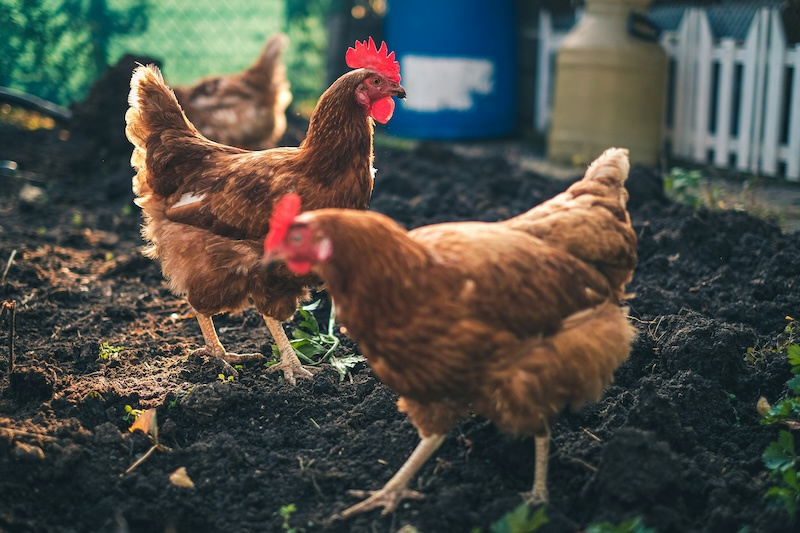
In Texas, a debate over chickens has ruffled feathers well beyond the coop.
As a result, lawmakers have introduced a proposal commonly known as the Texas Backyard Chicken Bill. In short, it limits the power of homeowners’ associations (HOAs) to ban residents from keeping hens on their property.
For some, it’s about food security, sustainability, and family tradition. For others, it raises concerns about neighborhood standards, property values, and the authority of HOAs to govern according to the wishes of their members.
With millions of Texans living under HOA rules, the measure has sparked wide-ranging discussions in legislative halls, suburban neighborhoods, and city council chambers.
Background and Context
Backyard poultry keeping has become increasingly popular across the United States in recent years. From suburban households to small urban yards, residents are embracing the idea of raising hens for fresh eggs, pest control, and sustainable living.
However, the practice has also led to friction between homeowners and homeowners’ associations (HOAs).
Many HOAs impose restrictions on livestock, including poultry, citing concerns over noise, odor, property values, and neighborhood aesthetics.
In Texas, where roughly 20–25% of homeowners live under HOA governance, these private community rules can significantly impact whether a resident is permitted to raise chickens on their property.
In some towns, you can keep a small flock without any issues. In others, chickens are completely banned.
And if you live in a neighborhood with a homeowners association, well, that’s another set of rules entirely. Many HOAs have blanket bans on any kind of livestock, including the friendliest of hens. This confusion has left many Texans frustrated.
The pandemic made things even more complicated, as supply chain issues and rising grocery costs had people thinking more seriously about growing and raising their own food.
Against this backdrop, lawmakers introduced legislation, commonly referred to as the Texas Backyard Chicken Bill, designed to limit HOA restrictions. In effect, it ensures that residents across the state have the right to keep a small number of chickens.
The bill sparked a statewide conversation. Understandably, it drew support from advocates of food independence. At the same time, it triggered pushback from HOAs and some property owners concerned about potential neighborhood impacts.
Bill Details
Bill 326, formally introduced in the Texas Legislature during the 2023 session, seeks to establish uniform rights for homeowners who wish to raise poultry within HOA-governed communities.
The most recent effort was presented in Senate Bill 141, introduced in the 2025 legislative session. These bills come with some pretty specific rules, and they don’t give people free rein to turn their backyards into full-scale farms.
HB 2013 got pretty far. The House passed it in April 2025, and it had a planned start date of September 1, 2025. But the Senate Local Government Committee put the brakes on it.
It was left in committee in May and never made it through the full Senate. So it didn’t become law.
SB 141 had a similar goal of allowing up to six chickens, limiting what HOAs/municipalities could ban. However, it had one extra condition: its rules would only apply to HOA covenant