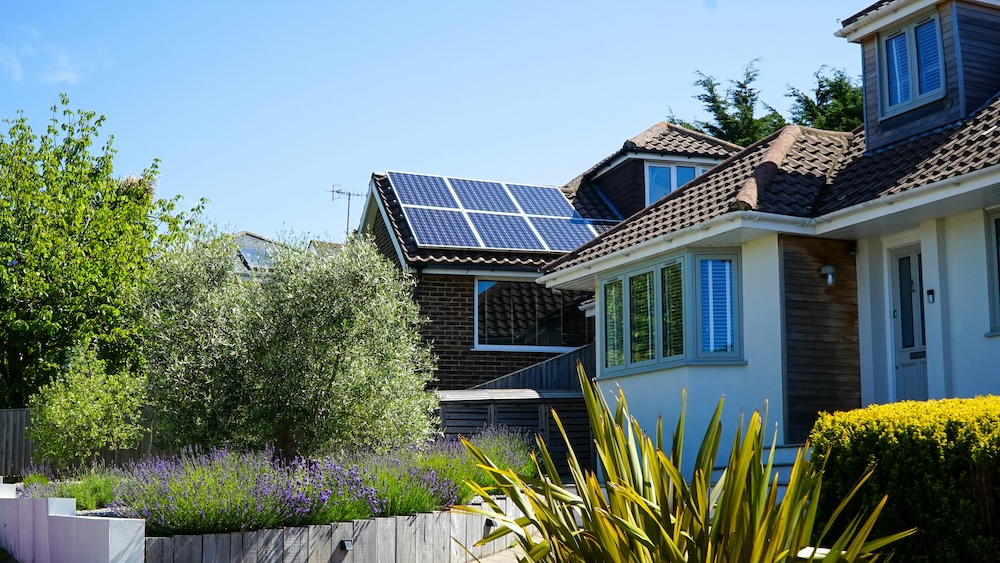
Homeowners’ associations often raise concerns when homeowners want to go solar.
In Texas, state law protects your right to install solar energy systems, but there are still specific rules and exceptions to follow.
In this article, we’ll break down how Texas law has evolved and explain what HOAs can and can’t regulate.
Can an HOA Stop You From Installing Solar Panels in Texas?
The short answer is no, HOAs aren’t allowed to enforce rules that completely stop you from installing solar panels on your property—and that’s according to Texas Property Code § 202.010.
However, they can still impose restrictions or limits, but only under specific circumstances.
Why Do HOAs Restrict Solar Panel Installations?
HOAs usually restrict solar installations due to legal and practical reasons. In a few cases, the cause may be aesthetic.
Structural Liability
It’s not that HOAs are anti-solar, but they have a few things to worry about when it comes to solar panels.
Structural liability is the most obvious cause for an HOA to restrict solar panel installation. They’ll worry about roof damage from improper installation, panels voiding roof warranties, and even electrical issues.
An HOA will also want to discuss who has to pay if shared structures, like condos, suffer from some sort of damage.
To limit structural liability, HOAs often request engineering requirements and insurance clauses.
Property Value
In some cases, an HOA may restrict solar panel installation if it is concerned that it’ll affect property values.
If the panels are reducing curb appeal, they may make homes harder to sell or create buyer resistance. However, that’s rarely the case with HOAs because solar panels, contrary to common belief, will increase property value rather than decrease it.
Aesthetic Concerns
One of the main purposes of an HOA is to maintain a consistent look across the neighborhood. If your solar panels face the street or sit at odd angles, they may be seen as disruptive. That’s why most of the HOA’s actions concerning solar panels are related to placement and visibility.
They won’t stop you from installing them, but they may ask that you change the configuration so that it’s more uniform in the neighborhood.
Shared Roof Issues
In townhouses and condos, the roofs may be owned by the HOA rather than the homeowner. And because solar panels can affect shared drainage and maintenance, the HOA might restrict installation. That’s especially if the panels interfere with future repairs or create conflicts over responsibility.
Understanding Your Rights as a Homeowner
It’s important to know your rights as a homeowner when it comes to solar panel installation. Otherwise, you may be wrongfully restricted. Here’s a guide to understanding how the law is in your favor and how to assert your rights.
- You Have the Right to Install Solar Panels
The Texan law protects your right to install a solar energy device on your property, even if you live in a homeowner’s association. This means that your HOA can’t outright ban you from doing so, and any existing HOA provision that bans you is now void according to Texas Property Code 202.010.
- There Are Limits to HOA Rules
An HOA can indeed regulate solar panel installation in certain ways, but there’s a limit as to what they can do.
Here’s a summary of what an HOA has the right to do in case a homeowner wants to install a solar panel:
- Require architectural approval before installation
- Apply appearance standards on the panels, mostly concerning colors and visibility of wiring
- Restrict panels above the roofline or non-roof installations
- Regulate the placement of solar panels on roofs
- You Have the Right to a Fair Approval Process
An HOA can and most likely will require architectural review of your panels before installation. However, once you submit your plans in writing, the HOA must act in good faith. They can’t delay your approval without a basis, and if they deny your request, they must explain the decision in writing.
If your HOA ignores your approval request entirely or delays it, you may have legal rights to challenge their decision.
- Documentation Is Your Friend
To strengthen your case in any potential conflict, it’s better to provide professional installation plans and show compliance with safety standards.
To make your case even stronger, you can use energy production estimates to argue that your placement is efficient. You can also address HOA aesthetic concerns, like color matches, to get your approval faster.
- HOAs Can’t Do a Lot of Things
It’s important to know that HOAs can’t do a lot of things when it comes to solar panel installation. For example, they can’t ban you from going solar, they can’t require placements that make your panels ineffective, and they can’t enforce outdated bans.
They have to comply with the updated state solar laws.
Evolution of Solar & HOA Law in Texas
Here’s a quick rundown of how the law changed in Texas over the years:
Early limitations for solar under HOA control
Before new state laws concerning solar panels, HOAs had a broader authority in Texas. They could restrict exterior modifications and require architectural approval before any changes were made.
While you probably still have to run any modifications by the HOA, they can’t stop you from installing your panels.
First major change: HB 362 (2011)
The year 2011 saw the first major change in how HOAs handle solar panel installation. That’s the year the Texas legislature passed House Bill 362, which added section 202.010 to the Texas Property Code.
The law stated that HOAs and POAs can’t stop a homeowner from installing a ‘solar energy device,’ which includes solar panels on the roof or the yard.
In other words, any HOA rules that ban solar panel installation were voided, giving Texans the right to install residential solar panels in HOA communities.
However, according to this law, HOAs can still regulate how solar panels are installed within their limits. Exceptions include public health and safety issues.
Closing a loophole: SB 1626 (2015)
In 2015, Senate Bill 1626 amended Section 202.010 to close an important loophole. The prior law allowed a developer-controlled HOA to ban solar installation as long as it was during the development period.
This could result in delayed solar rights for many years in large subdivisions, so SB 1626 restricted this developer exception. That way, a developer can only stop solar installations in subdivisions with fewer than 51 planned residential units.
In other words, if a community has 51 or more planned houses, the developer can’t block solar rights during the development period.
This important amendment prevented developers from claiming that a subdivision remained in development for years as a way to stop residents from going solar.
Modern Protections: Texas Property Code §202.010
Today, you can summarize Texas solar rights in Texas Property Code 202.010.
The law states that a property’s owner association may not enforce a provision that stops a property owner from installing a solar energy device. However, the HOAs can still regulate solar devices in narrow scenarios that we’ll discuss later.
Another thing this law states is that HOAs and their architectural committees can’t withhold approval if the required conditions are met, unless written justification is provided.
2025 Update: Inclusion of Solar Roof Tiles — HB 431
A new update to the law came in 2025 under the name of HB 431, or House Bill 431. This adjustment changed the definition of ‘solar energy device’ in Property Code 202.010 to include solar roof tiles, otherwise called solar shingles.
Some HOAs tried to restrict these shingles because they weren’t clearly defined as solar energy devices under the earlier law. So, HB 431 clarifies that they are to be treated the same as other devices.
What HOAs Can Still Regulate — Legitimate Restrictions
It’s true that an HOA can’t outright stop you from installing solar panels, but that doesn’t mean you’re a free bird. According to Texas law, they can still regulate solar panel installation, like in the following cases:
A Safety Hazard
If your proposed solar panel installation violates health and safety laws, an HOA can stop you from doing it. This is mostly done to prevent electrical fires.
Non-Compliant Placement
An HOA can restrict solar panel installation if it’s not compliant with the law. For example, in Texas, it’s not allowed to extend panels above the roofline, in which case an HOA can stop the installation.
Likewise, the panels have to be parallel to the roof and conform to its slope.
In the case of ground-mounted panels, the HOA will stop installation if they extend above your fence line.
You likely won’t have any run-ins with an HOA if you install your panels properly without violating roof warranties.
HOA-Owned Properties
If you’re trying to install a solar panel on an HOA-owned structure or a common property, they have the right to stop the installation.
Steps for Homeowners Installing Solar Panels in an HOA in Texas
If you want to install solar panels in an HOA community in Texas, here are the steps to follow to stay legal and avoid common issues:
Step 1: Prepare Your Documents and Understand Your Rights
Before doing anything, start preparing copies of your CC&Rs and related HOA rules, including architectural guidelines. Look for sections about exterior modifications because they’ll tell you what your HOA says you must do before installing anything.
Next, you should learn about the Texas solar rights law, which protects your right to install a solar energy device.
Step 2: Prepare Your Solar Proposal
After you learn your rights and prepare your documents, it’s time to start preparing your solar proposal. It should be a set of documents that includes a site plan, elevation drawings, wiring plans, and proof that the system meets local building and electrical codes.
You should also include any aesthetic issues that may trigger a response from the HOA, including black frames and hidden wiring.
Step 3: Submit a Formal Request to Your HOA
After you’re done preparing, you can submit your solar plan to the HOA board in writing, and it’s better to include a cover letter that summarizes the project and confirms compliance with HOA and state law.
In this phase, it’s important to keep copies and confirm receipt because if you install the panels without confirmed approval, the HOA may try to object later.
Step 4: Wait for Approval
After submitting the proposal, follow up with the HOA and be prepared to answer questions about placement or appearance.
When you get the written approval, you can start the installation, and if the HOA tries to impose unreasonable changes, you can ask them to cite the specific law that supports this restriction.
FAQs
Can an HOA force the removal of existing panels?
No, the HOA can’t force the removal of your panels if they already exist and were approved at the time of installation. However, if you intend to modify the panels, you have to run the modifications on them to avoid potential conflicts.
Are solar roof tiles treated differently from traditional panels?
No. Under modern Texas law, solar roof tiles are treated the same as traditional solar panels.
Do ground-mounted solar panels fall under HOA restrictions?
Yes, ground-mounted systems are more restricted than roof-mounted ones. HOAs may prohibit them unless they’re located inside a fenced yard.